Sectigo
Design engineering / Product analytics
Research-led UX and in-app feedback systems
The problemSecurity journeys across five platforms needed clearer navigation, reusable in-app interactions and feedback that product teams could act on.
My contributionI mapped security journeys and designed reusable in-app feedback patterns, timed to each user’s task and product.
Observed NPS change
10 pts
10-point observed change across two products; not attributed to design alone.
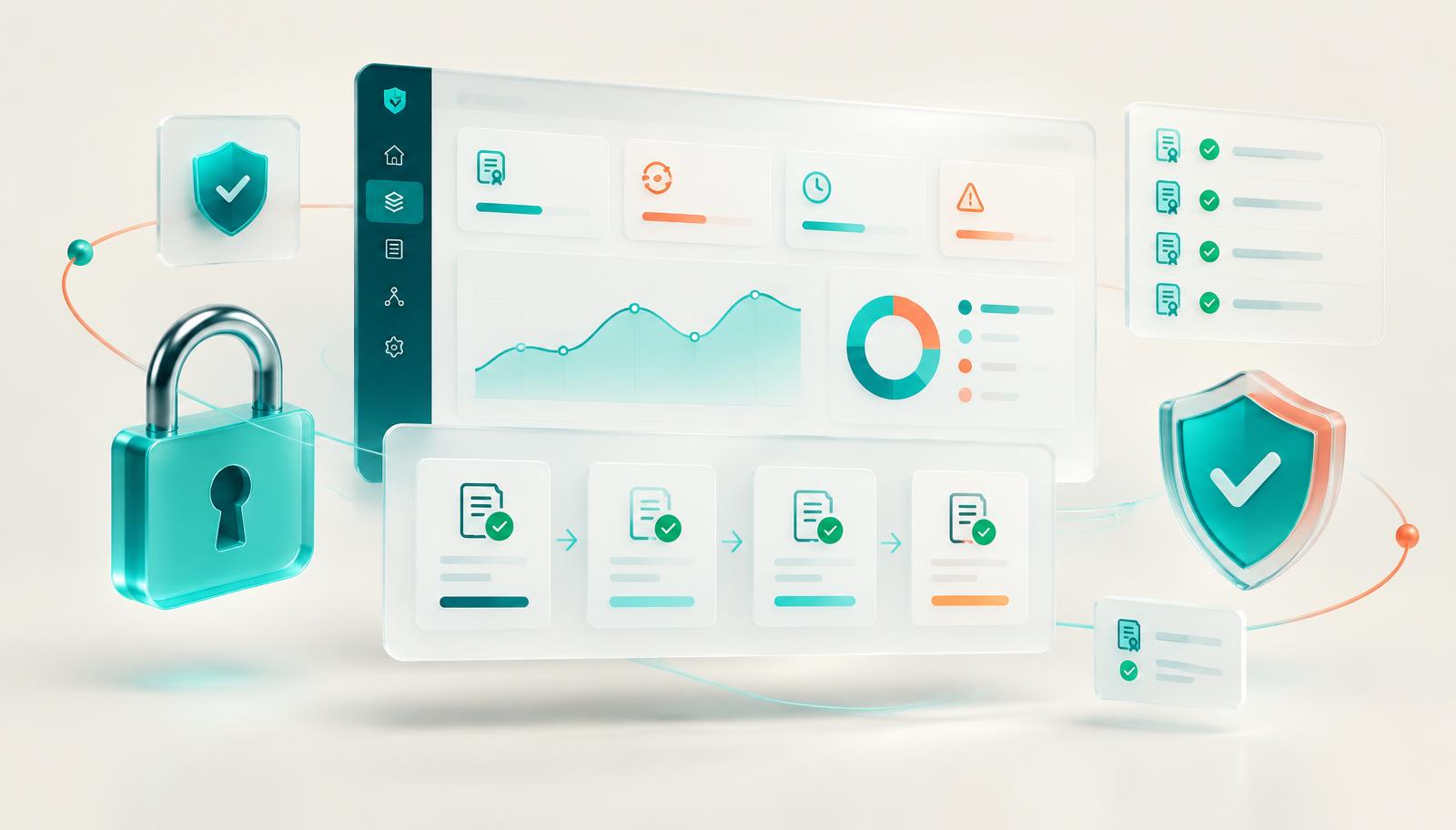
- NDA
- Not a product screenshot
- My role
- Associate product designer
- Team
- Product managers, engineering, support and marketing
- Timeline
- Aug 2025–present
- Tools
- Figma, Figma AI, Userpilot, Amplitude, Claude
Process
The work behind the decisions.
- 01
Map priority journeys
Mapped top user paths and navigation friction, synthesizing NPS comments and behavioral analytics into a prioritized design backlog with product stakeholders.
- 02
Develop reusable in-app patterns
Designed announcement, onboarding and feedback patterns with product-specific targeting: the right moment, audience and task-aware question.
- 03
Measure and refine
NPS/CES and product feedback informed refinements to targeting, timing and accessibility. AI-assisted prototyping and regular reviews supported 20+ stakeholder-approved UI designs weekly.
Closed-loop feedback strategy
Collect → Tag → Prioritize → Design → Iterate
Feedback becomes useful when it is asked at the right moment, sorted into themes and answered with a design response teams can review.
- NDA
- Not a product screenshot
01Collect
NPS/CES and in-app prompts timed after a task, never mid-task
02Tag
Group comments: navigation, clarity, onboarding, requests
03Prioritize
Weigh frequency with analytics and product goals
04Design
Shape a response pattern and review with stakeholders
05Iterate
Refine targeting, timing and accessibility
Iterate feeds the next collection cycle
Lead design responses that drove the change
- ClarityRedesigned in-app modal hierarchy around one clear primary action
- NavigationDesigned contextual navigation and onboarding guidance
- TimingRefined feedback prompt timing and targeting after key tasks
Reading the evidence
Observed: NPS trend recorded across two products.
Not claimed: that a single design response alone produced a measured lift.
These design responses supported iteration; the NPS trend is observed, not a controlled causal result.

- NDA
- Not a product screenshot
Key decisions
Design decisions that shaped the experience.
Shared patterns across five platforms
Developed reusable announcement, onboarding and feedback design patterns across products, with per-product tailoring.
Trade-off
Balance shared patterns with configuration options for each product team's needs.
Respect the task before asking
Targeted surveys and timed dismissal keep feedback requests from competing with the user's current task.
Trade-off
Prioritize contextual feedback over maximizing response volume.
Design value & supporting evidence
Research-led UX and in-app feedback systems
Between Q1 and Q2, two products recorded an observed 10-point NPS change; the measurement does not isolate design’s effect. A separate onboarding and feature-discovery initiative reported +5% engagement and reached 200+ customers over two weeks, with 2+ in-app engagements launched or refined weekly. The design scope spans five platforms within Sectigo’s 700K+ global customer ecosystem—not a count of personally studied users.
- Product sentiment signal
- 10 pts
- Observed NPS change across two products; design’s effect not isolated.
- Customer ecosystem in scope
- 700K+
- Sectigo’s company-wide customer ecosystem; design scope spans five platforms.
- Approved UI designs per week
- 20+
- Stakeholder-approved design output, supported by AI-assisted prototyping.
Reflection
Reusable patterns preserve product-specific needs when shaped with cross-functional teams. Next validation would examine task completion and navigation friction alongside product feedback.
Next case study
QR-led spatial interaction and rapid prototyping
I connected QR-led retrieval, compact content hierarchy and clear system states within headset constraints.
View case study